


Distance
10 Miles

Elevation Gain
1,600 Feet

Difficulty
Moderately-strenuous

Cost Per Person
$850
Program Overview
September 21 at 5 p.m. – September 24 at 10 a.m.: Our all-inclusive experience in Glacier is just for you! Join us for four days where we take care of it all – airport pick up, lodging, food, driving to trailheads and picking Glacier’s best trails and hidden gems. You will get to spend time on trail with our Outdoor Education Specialists exploring and hiking in Glacier, while learning more about the Crown of the Continent ecosystem.
Exploring Glacier in September – 4 Day Glacier National Park Crash Course
Hike Overview Continued
Itinerary: (subject to change due to trail closures and weather)
Day 1: Airport Pickup/Arrival to Campus, dinner, and short walk nearby.
Evening Program: Native America Speaks Program: 7:00 p.m. – 8:00 p.m.
Day 2: Grinnell Lake: Geology, Wildlife and History
Length: 7.2 miles roundtrip, Elevation Change: 351 ft
Day 3: Piegan Pass: Alpine Ecosystems and Flora
Length: 9 miles roundtrip, Elevation Change: 1,750 ft
Evening Program: Closing Fire: 7:00 p.m. – 8:00 p.m.
Day 4: Airport drop off/Departure Day
Food: The following meals will be provided by the Glacier Institute staff: Dinner on Day 1 through lunch on Day 4. We can accommodate any dietary restrictions upon request. Breakfast and dinners will be eaten in camp while most lunches will be eaten out in the field.
Accommodations: 3 nights of lodging are included into the course fee. Our student cabins are basic, hostel-style cabins with 5 single beds, bedside lights, and electrical outlets. Students should be prepared to share a cabin with up to 4 other people, cabins are separated by gender. Couples may be paired up in the event there is ample space. We provide a bottom sheet for your bed as well as a pillow and pillow case, but please bring a warm sleeping bag. Be sure to bring a flashlight or headlamp for night trips to the bathroom. The community bathhouse has flush toilets, sinks, and hot showers.
Park Entrance Fees: Participants are responsible for purchasing their park entrance passes prior to the course. These can be purchased online at: https://www.recreation.gov/sitepass/74280.
Physical Requirements: Moderately-strenuous. Participants will hike an average of 8 miles each day over uneven terrain with an average elevation gain of 1,100 feet. See hike-specific trail stats on itinerary above (these are approximations).
Equipment: You will receive a Field Camp gear list once you register. Most importantly are comfortable hiking shoes, snacks, water bottle at least 1-2 liters, backpack, rain gear, hat, and sunscreen. Weather can be varied, especially in the higher altitudes, so please be prepared with appropriate clothing, with extra warm layers. We will be hiking in varied elevations throughout the course so expect cold, potential snow and high winds.
Suggestions on Getting There: The Glacier Institute Field Camp is located just inside the West Entrance to Glacier National Park. The nearest airport is in Kalispell, Montana, about 30 minutes from Field Camp. A Glacier Institute Airport shuttle will be provided between 1:00pm and 4:00pm, dependent on arrival times of the group. Travelers driving in should plan to arrive at Field Camp on arrival day between 4 p.m. and 5 p.m. to check in and get settled. Travelers should plan to depart Field Camp by 10 a.m. on departure day. If you find airline reservations are difficult to make by flying into Kalispell, an alternative is to fly into Missoula, which is about three hours from the park. If you fly into Missoula you will need to rent a car for the drive up to the park.
*Note: airfare and car rental are not included in the trip price.
Notes on our Itinerary: It is common for many of our days to start early with breakfast between 6 a.m. and 7 a.m. We plan accordingly to beat the heat as well as the crowds, and allow ourselves ample time to reach the trailhead each day. The early bird gets the worm, especially in Glacier National Park. We allow ample down time in the evenings, upon returning from our daily excursion. Due to the nature of experiencing a natural place such as Glacier National Park we are constantly adjusting our plans to accommodate road and trail closures (due to bears, weather and wildlife). Therefore natural circumstances may arise that warrant us adjusting some of the above itinerary. *Be sure to also check out our adult day courses going on. If there is one you are interested in joining during your week, please inquire upon registration.
Trip Difficulty: The hikes will range from 7-9 miles in length. The hikes will be moderate to moderately strenuous with elevation gains of 400-1,800 feet. All of the hikes are on maintained trails and will take place between elevations of 5,000 to 8,100 feet. In order to comfortably complete the hikes on this trip, all hikers should be participating in regular aerobic activity four to five days a week for a minimum of 30 minutes duration — jogging, bike riding, or using the aerobic equipment at your local gym are just some examples. By the time of the trip you should be able to comfortably maintain an average hiking speed of 2-2.5 mph for six to eight hours — the key word being comfortably. Because of the small, but real potential for grizzly bear encounters while hiking in Glacier National Park, it is not safe for people to become separated from the group. Therefore, it is imperative that you are able to maintain the hiking pace recommended by the leader.
Weather: Field Camp is located in West Glacier, roughly 3,600ft above sea level. Glacier National Park covers quite a large spread of land, and straddles the continental divide. On any given day, the weather on the west side of the divide can be quite different from the weather on the east side of the
divide. The best way to be prepared for ever changing mountainous weather is to have layers! See our gear list for recommendations on what to bring. We recommend checking the weather prior to your trip. NOAA Weather Forecast is a great resource for this. Although we will be lodging in West Glacier we will also travel to the eastern side of the divide near East Glacier & Saint Mary; checking the weather for these different locations can help to provide a big picture of the forecast.
Gratuity Guidelines: Gratuity for Outdoor Education Specialists and/or Instructors is not included.
Fellow Travelers: This is a group travel adventure. All participants are encouraged to review the itinerary and trip difficulty. It is inevitable that some travelers will have different goals, perspectives and abilities. We ask that the group respect each individual’s conditions and needs throughout the course or trip. We want everyone to enjoy themselves to the fullest!
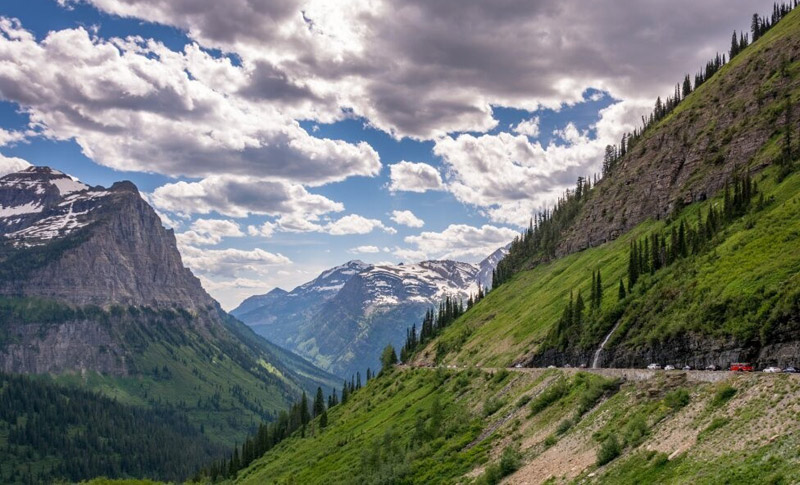
What to Expect On Your Exploring Glacier in September
- World-class guided hikes across Glacier National Park’s most iconic landscapes
- Expert outdoor education on ecology, geology, fire ecology, and wildlife
- Opportunities to see mountain goats, bighorn sheep, marmots, and other alpine species
* Any trails listed on this program or others are subject to change due to trail closure, weather, trail conditions, or wildlife.
Program Details
- This program meets at Glacier Institute Field Camp.
- The program will begin 5 p.m. on day 1 and ends at 10 a.m. on day 4. Please arrive 15 minutes early.
- Physical Requirements: Moderately-strenuous.
- Hiking distance covers less than 10 miles with less than 1600 feet elevation change.
- On-site parking available.
- Dinner on day 1 through lunch on day 7
- Guided hikes and outdoor education led by institute specialists
- Evening educational programs at field camp
- Packed lunches available on day 7
- Airport pick up and drop off scheduled to suit traveler needs (arranged with travel information)
What to Bring
Please remember that weather in NW Montana during all seasons can change quickly from warm and sunny to freezing at any time of the year. We recommend checking the weather prior to your trip. Please also check your course information sheet for specific gear requirements in addition to those listed below.
- Warm sleeping bag
- Comfortable hiking shoes
- Backpack
- Rain gear and warm layering clothing
- Hat and sunscreen
- At least 1–2 liter water bottle
- Binoculars
- Field notebook for notes and sketches
- Flashlight or headlamp