


Distance
2 Miles
Elevation Gain
250 Feet

Difficulty
Easy/Moderate
Cost Per Person
$175
Program Overview
February 13th, 9am – 1pm: Come learn about mosses and lichens! You will learn about the differences between mosses and lichens and the specific species that are found in Glacier National Park and the Flathead National Forest. How do these simple organisms contribute to the ecosystem and what benefits do they add?
Lichen in the Winter World
Hike Overview Continued
February 13th, 9am – 1pm: Come learn about mosses and lichens! You will learn about the differences between mosses and lichens and the specific species that are found in Glacier National Park and the Flathead National Forest. How do these simple organisms contribute to the ecosystem and what benefits do they add? Additionally, we will talk about the infamous “watermelon snow” that can be found and observed in Glacier National Park during the summer months.
We split our time up between a brief lecture/discussion and then head to Apgar to do a short snowshoe hike to investigate what lichens can be observed and also keep our eye out for some wildlife.
Meeting Place: Columbia Falls Office, 7450 HWY 2 East.
Itinerary: (subject to change due to trail closures and weather) After a brief introduction in our office in Columbia Falls, followed by a presentation with the basics of lichen, we will travel to Glacier National Park and hike or snowshoe the Oxbow trail. We will hike approximately 2 miles to look for various moss and lichens in the park. The course will end by 1 p.m. and will not be canceled due to weather.
Food: Please bring a trail lunch, plenty of water, and snacks for the day.
Park Entrance Fees: Participants are responsible for purchasing their park entry passes prior to the course. These can be purchased online at: https://www.recreation.gov/sitepass/74280.
Equipment: You will receive a Field Camp gear list once you register. Most importantly are comfortable hiking shoes, at least 1-2 liter water bottle, backpack, snow gear and warm layers. Gaiters may be useful as we walk through the snow.
Physical Requirements: Easy/moderate. Depending on the snow conditions, we will either hike or snowshoe approximately two miles along a flat trail.
Recommended Reading:
- Lichens of North America by Irwin Brodo, Sylvia Duran Sharnoff and Stephen Sharnoff
- The Lives of Lichens: A Natural History by Robert Lücking and Toby Spribille


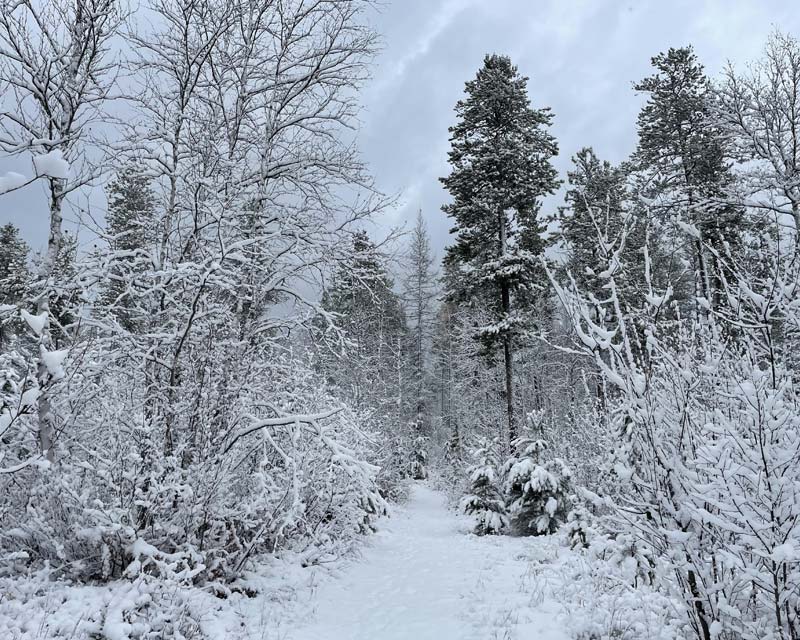

What to Expect On Your Lichen in the Winter World
You will learn about the differences between mosses and lichens and the specific species that are found in Glacier National Park and the Flathead National Forest. How do these simple organisms contribute to the ecosystem and what benefits do they add? Additionally, we will talk about the infamous “watermelon snow” that can be found and observed in Glacier National Park during the summer months.
We split our time up between a brief lecture/discussion and then head to Apgar to do a short snowshoe hike to investigate what lichens can be observed and also keep our eye out for some wildlife.
* Any trails listed on this program or others are subject to change due to trail closure, weather, trail conditions, or wildlife.
Program Details
Meeting Place: Columbia Falls Office, 7450 HWY 2 East.
Itinerary: (subject to change due to trail closures and weather) After a brief introduction in our office in Columbia Falls, followed by a presentation with the basics of lichen, we will travel to Glacier National Park and hike or snowshoe the Oxbow trail. We will hike approximately 2 miles to look for various moss and lichens in the park. The course will end by 1 p.m. and will not be canceled due to weather.
Park Entrance Fees: Participants are responsible for purchasing their park entry passes prior to the course. These can be purchased online at: https://www.recreation.gov/sitepass/74280.
Equipment: You will receive a Field Camp gear list once you register. Most importantly are comfortable hiking shoes, at least 1-2 liter water bottle, backpack, snow gear and warm layers. Gaiters may be useful as we walk through the snow.
Recommended Reading:
-
- Lichens of North America by Irwin Brodo, Sylvia Duran Sharnoff and Stephen Sharnoff
- The Lives of Lichens: A Natural History by Robert Lücking and Toby Spribille
What to Bring
Please remember that weather in NW Montana during all seasons can change quickly from warm and sunny to freezing at any time of the year. We recommend checking the weather prior to your trip. Please also check your course information sheet for specific gear requirements in addition to those listed below.
- Lightweight hiking boots or a sturdy pair of hiking shoes
- 2 liter sized water bottle or Camelback
- Day Pack with plastic bag liner or cover
- Waterproof rain jacket and pants
- Sunhat, sunglasses, sunscreen, insect repellant & lip balm
- Camera (optional)
- Trekking poles, if you like to use them for hiking (optional)
- Binoculars (optional)
- Field Notebook notes and sketches